ACT / Retrofitting
The Mechanical
Strengthening
Technique
MST doubles the strength and ductility of a reinforced concrete element without significantly increasing its dimensions or weight, and without harming the concrete section. It works in service, under load, and needs no setting time.
US 6,718,723 EG 21,647 EG 23,111 CA application 2,325,706
The principle
Squeeze the concrete,
and it carries more.
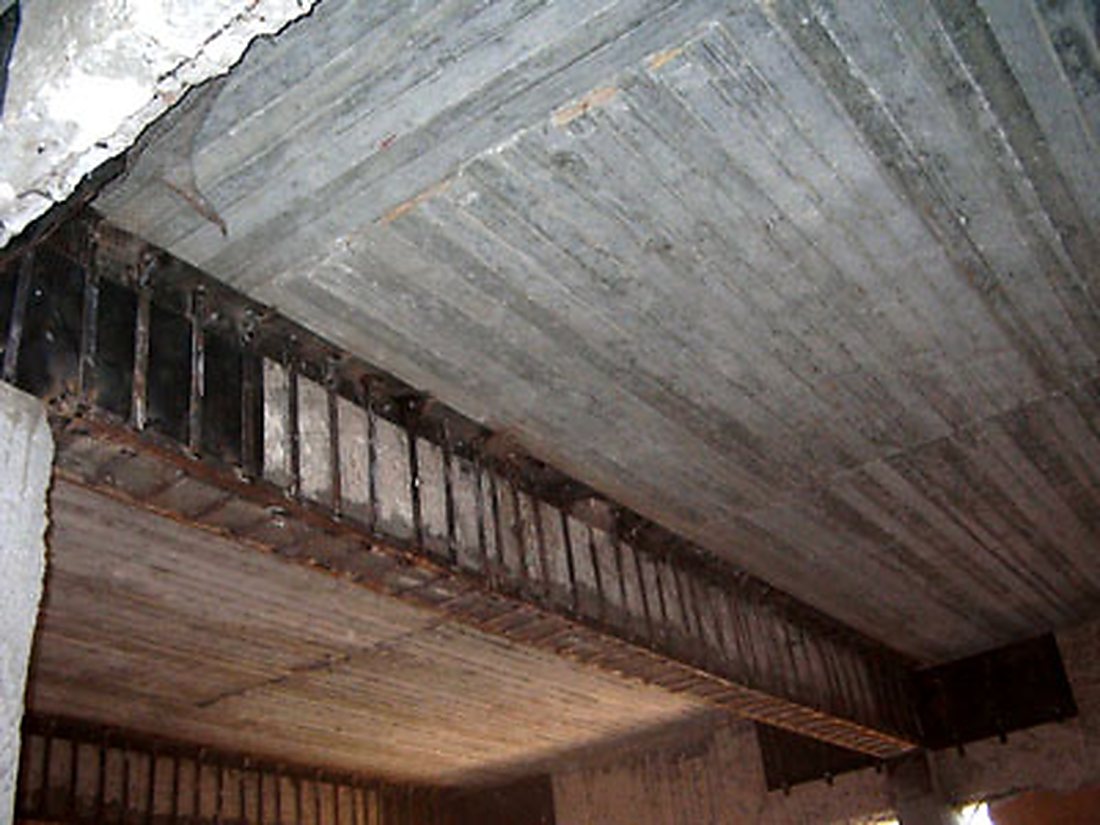
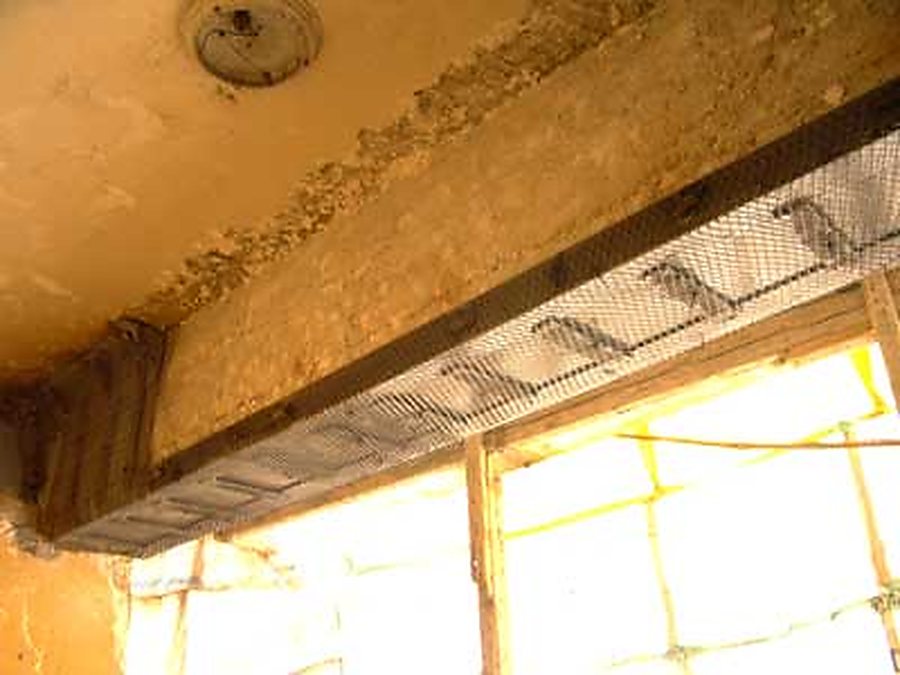
The technique applies active external confining pressure along the length of the element through a set of steel angles and, where needed, plates — fixed to each other by a number of strips. The pressure is applied by a casing, then locked in permanently by welding the strips.
Confined concrete is stronger and far more ductile than unconfined concrete. Because the pressure is applied before the new load arrives — not after the element has already deformed — the strengthening is working from the first kilonewton.
- No significant increase in member size or weight
- No damage to the existing concrete section
- No setting or curing time, unlike bonded or jacketed methods
- No local stresses induced in the parts of the element being strengthened
- Removable and re-usable pressure casing
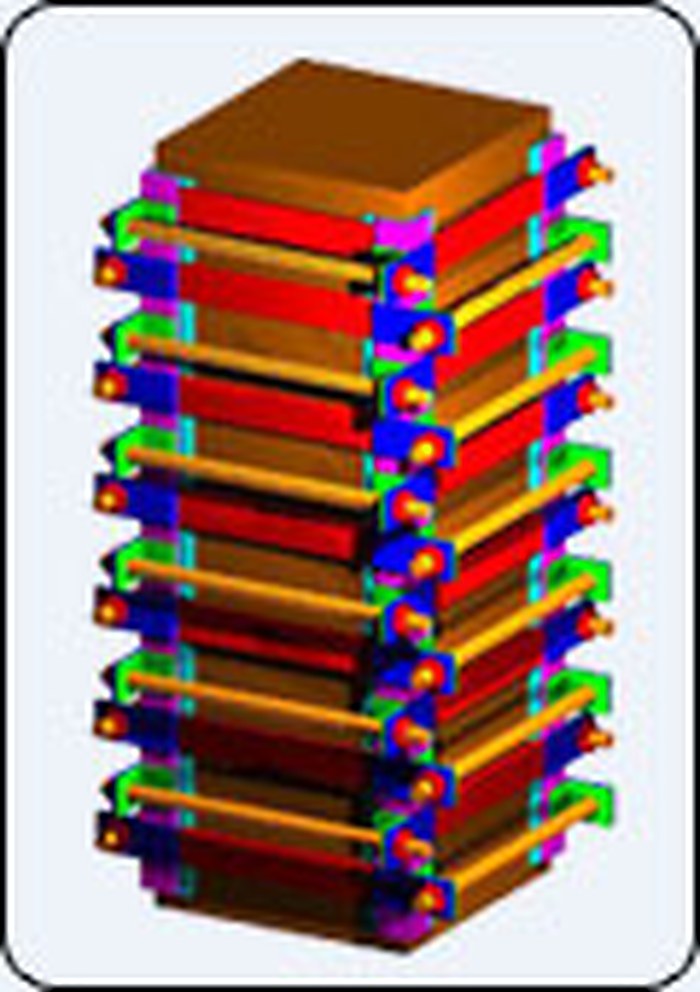
Angles and plates positioned
Steel angles are set along the element. Two, three or four faces can be used, depending on what is accessible on site — a column against a party wall is still a candidate.
Pressure applied through the casing
The concrete member is compressed by the pressure casing acting through the steel angles. The magnitude is set by design, not by guesswork.
Strips welded, casing removed
Pieces of steel strip are welded on to sustain the exerted confining pressure permanently. The casing comes off and moves to the next element the same day.
Strengthening — columns
Axial capacity,
more than doubled.
Tests carried out at the Housing and Building National Research Centre showed that MST doubled the axial load carrying capacity of the specimens.
A second test simulated the real site condition: one column was loaded to its working load, strengthened by MST while still under load, then loaded to failure. Its axial capacity came out 212% higher than the unstrengthened reference column — which is the case that matters, because nobody empties a building before repairing it.
Axial capacity relative to the unstrengthened reference column. Reported from the HBRC test series.
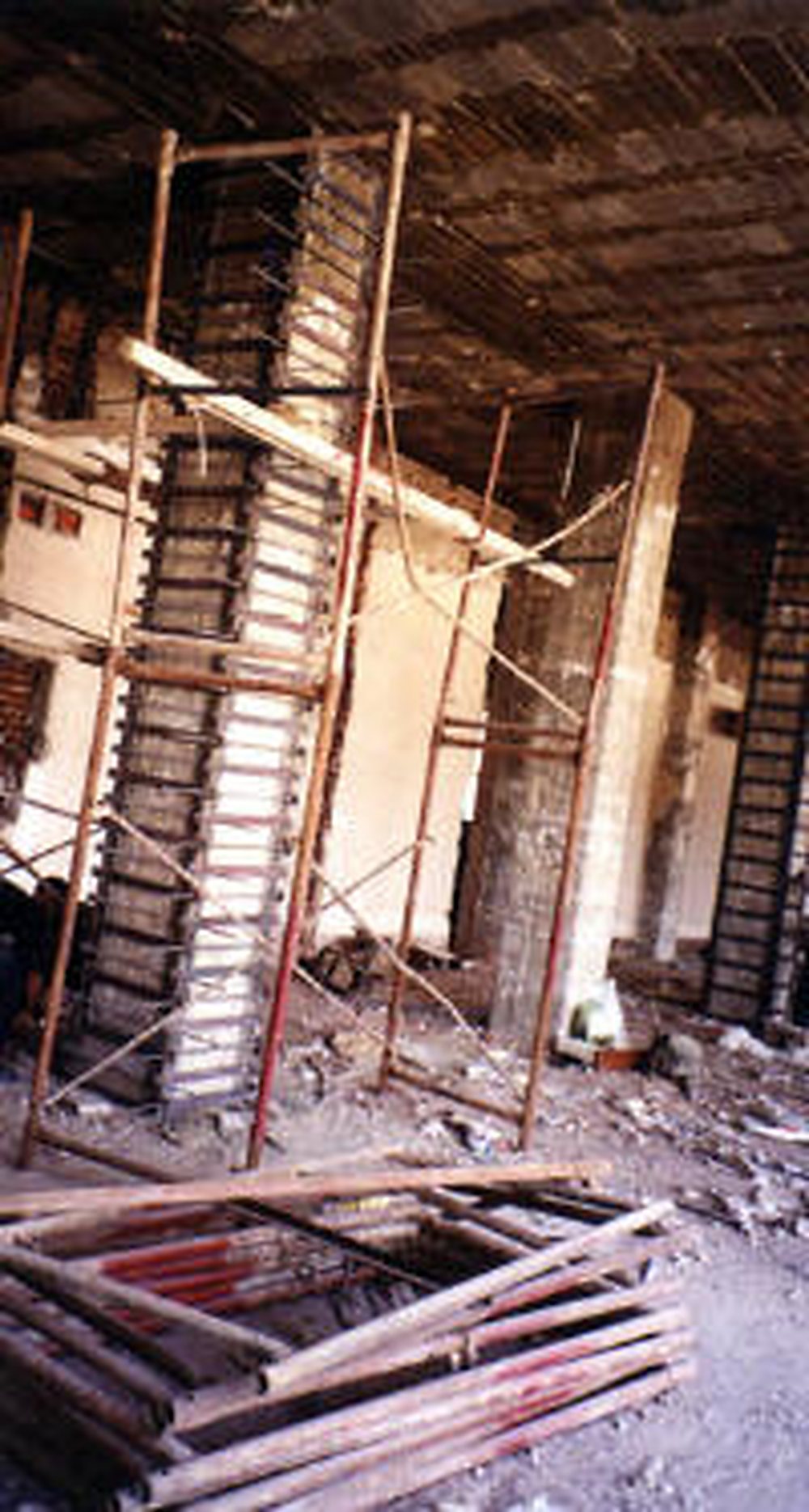
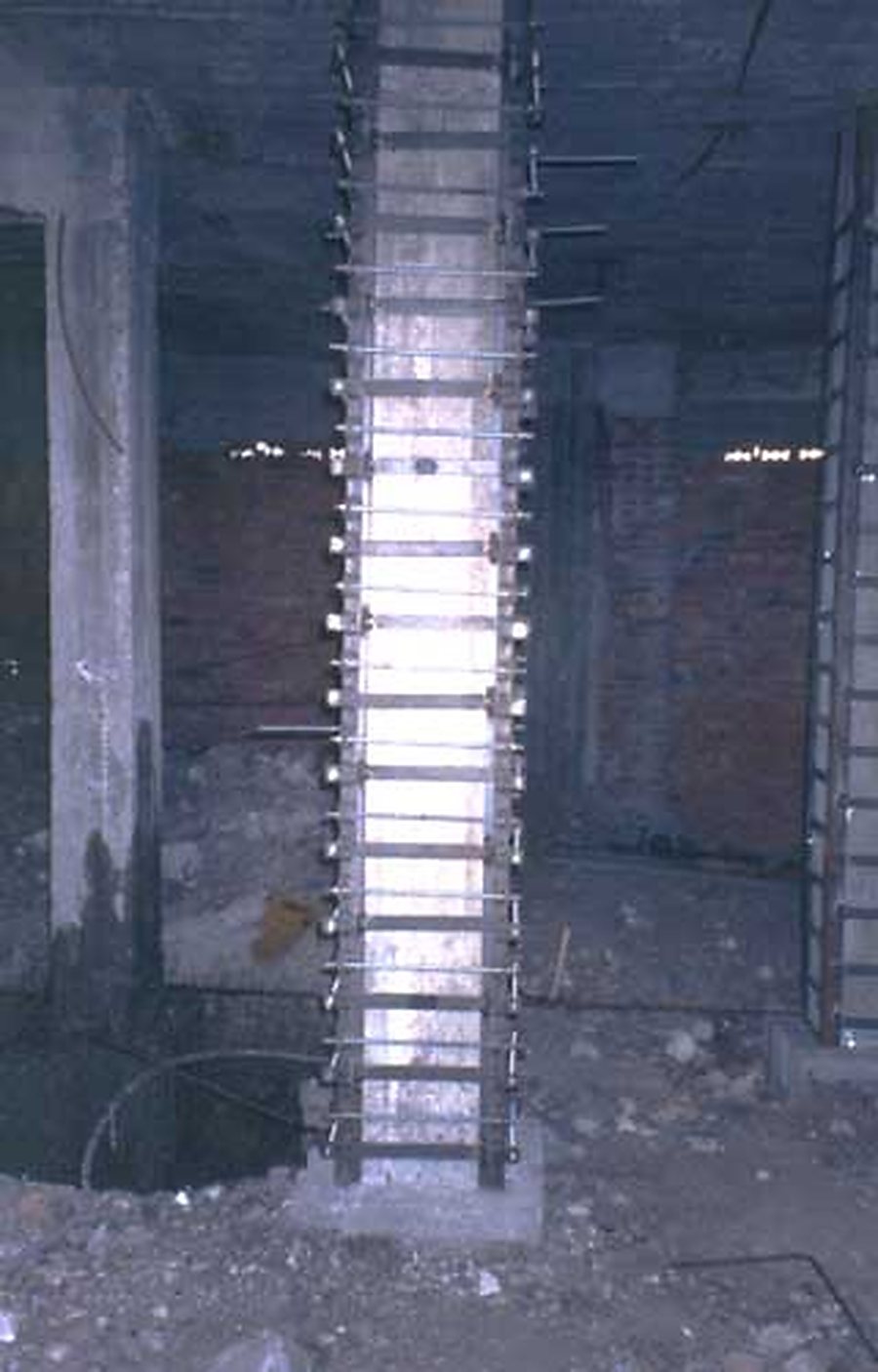
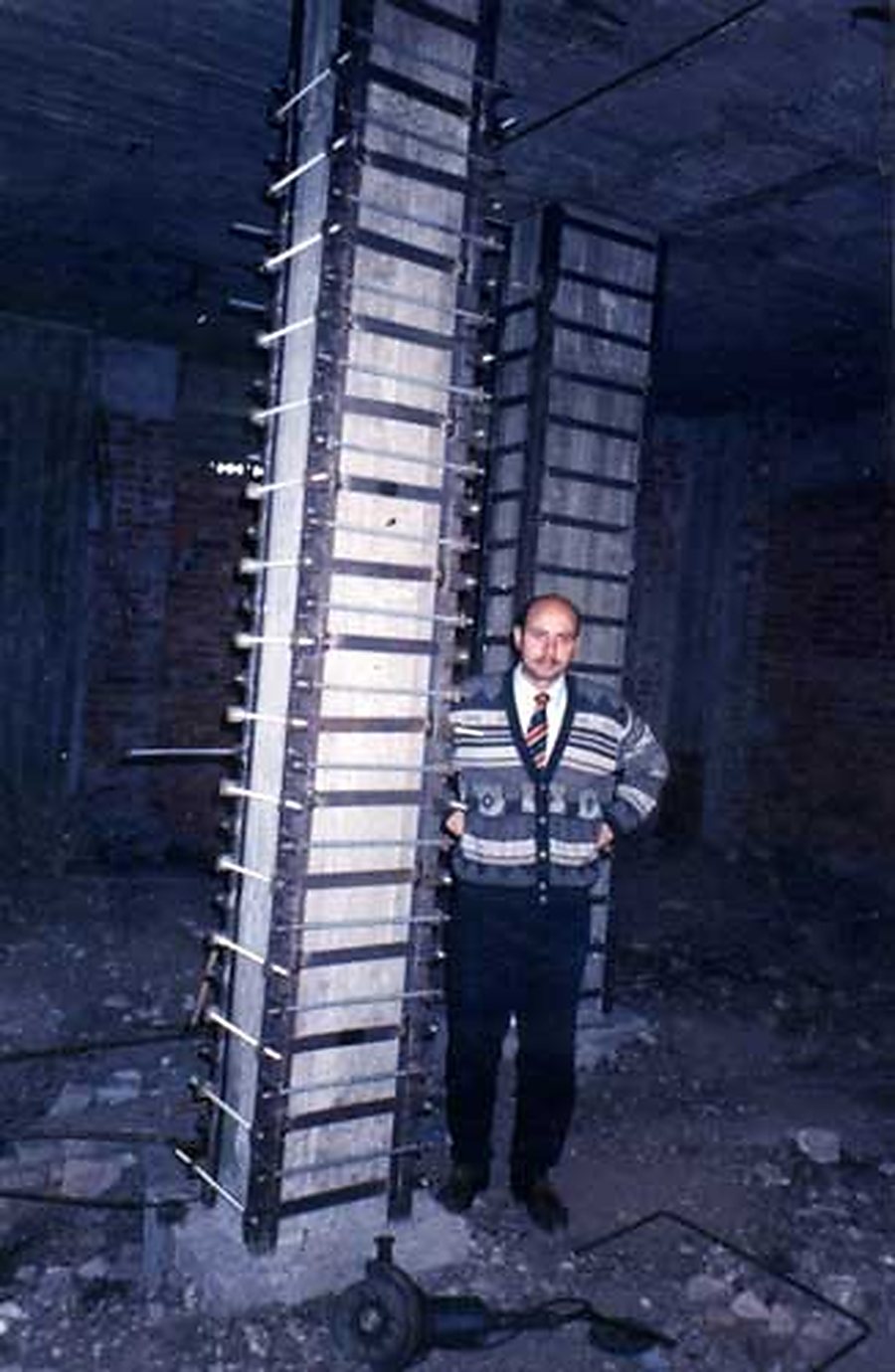
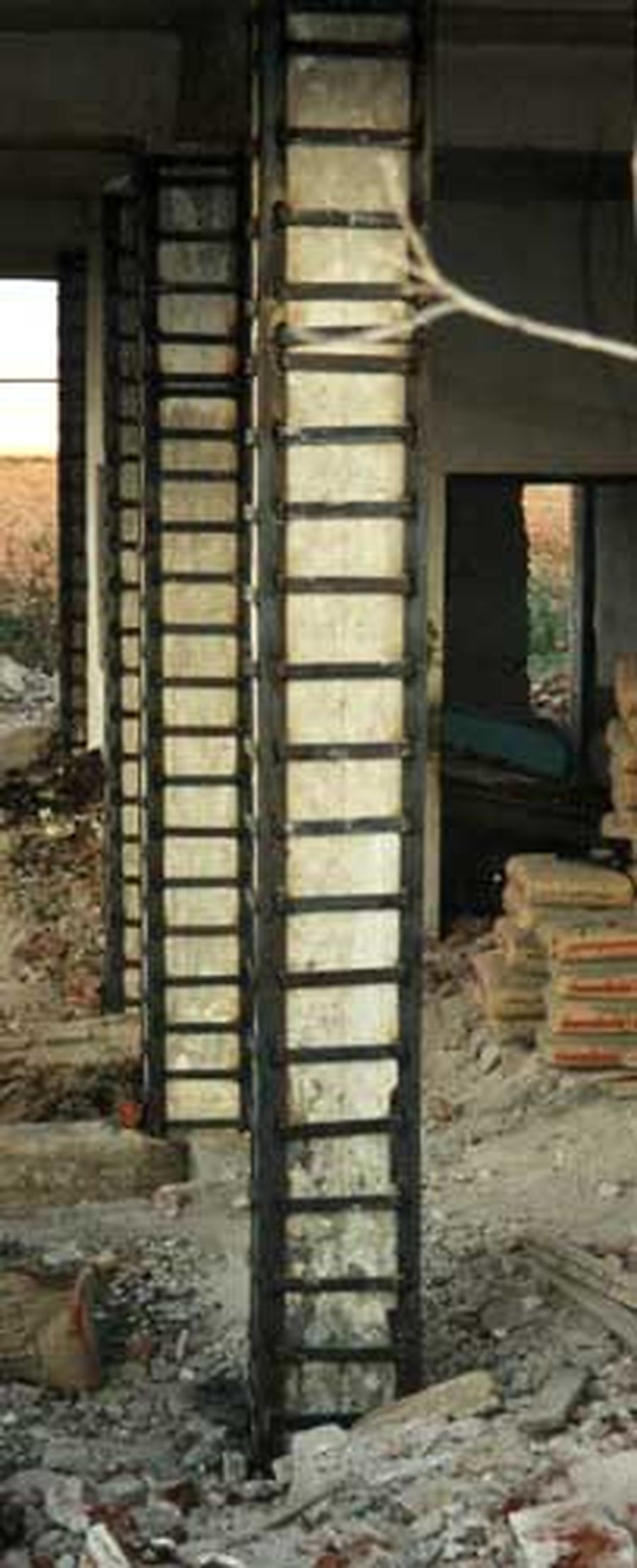
Case histories: four, three and two accessible faces — and a hexagonal section.
Strengthening — beams
Stiffer, stronger,
and it cracks less.
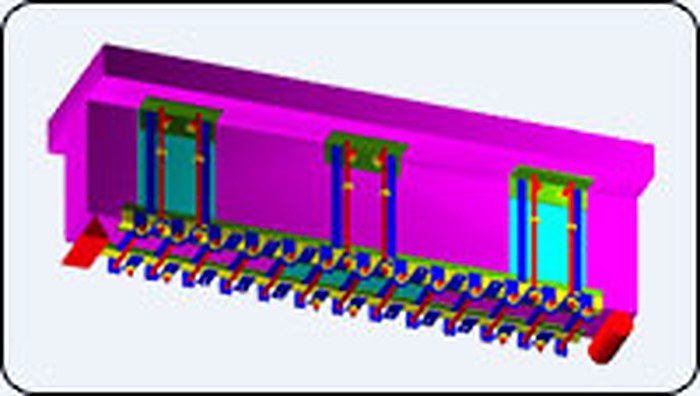
Comparing MST-strengthened beams with unstrengthened reference beams loaded to failure, at both low (20 N/mm²) and normal (40 N/mm²) concrete grades:
- Higher stiffness and higher ultimate load capacity
- Better cracking behaviour throughout the load range
- Formation of flexural and diagonal shear cracks delayed
- Crack widths limited, which improves aggregate interlock and so raises shear and flexural capacity
- Increased lateral confinement, enhancing the confinement mechanism itself
- Works across different concrete grades — including low-grade concrete
A field test on a retrofitted 7 m span beam, instrumented with deflection gauges and loaded on site, stayed in the elastic zone at five times the working load.
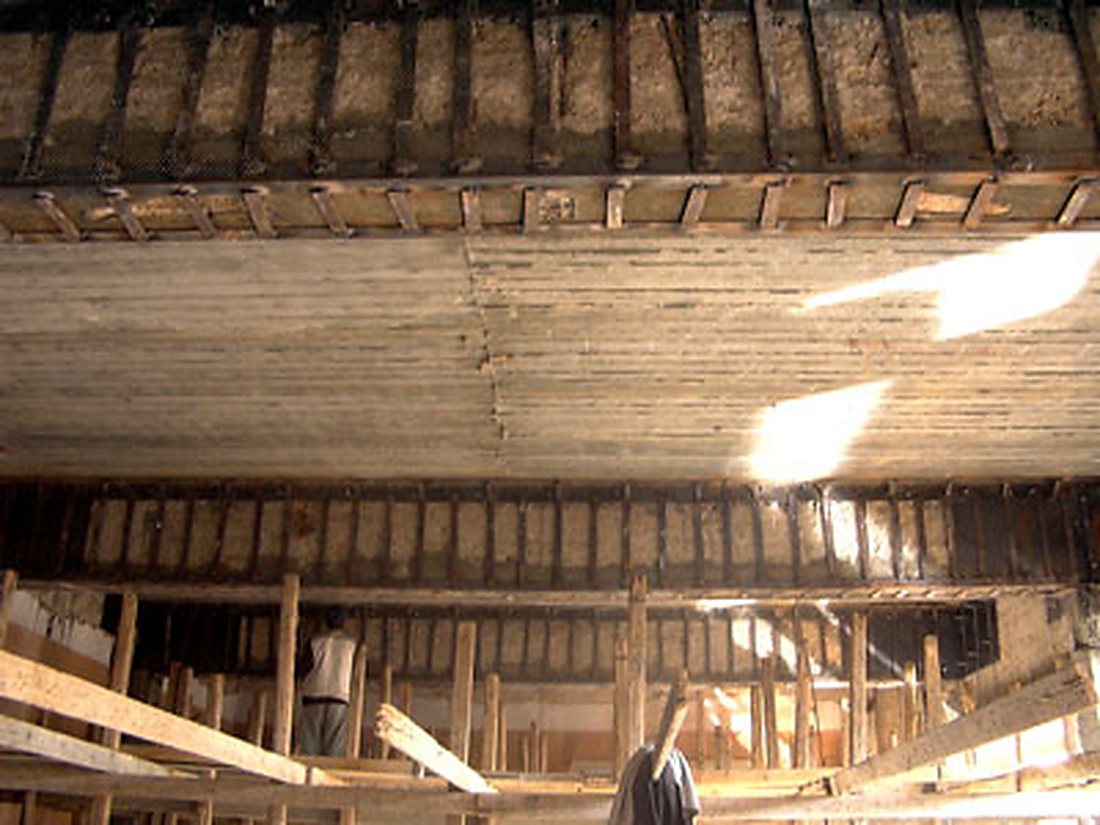
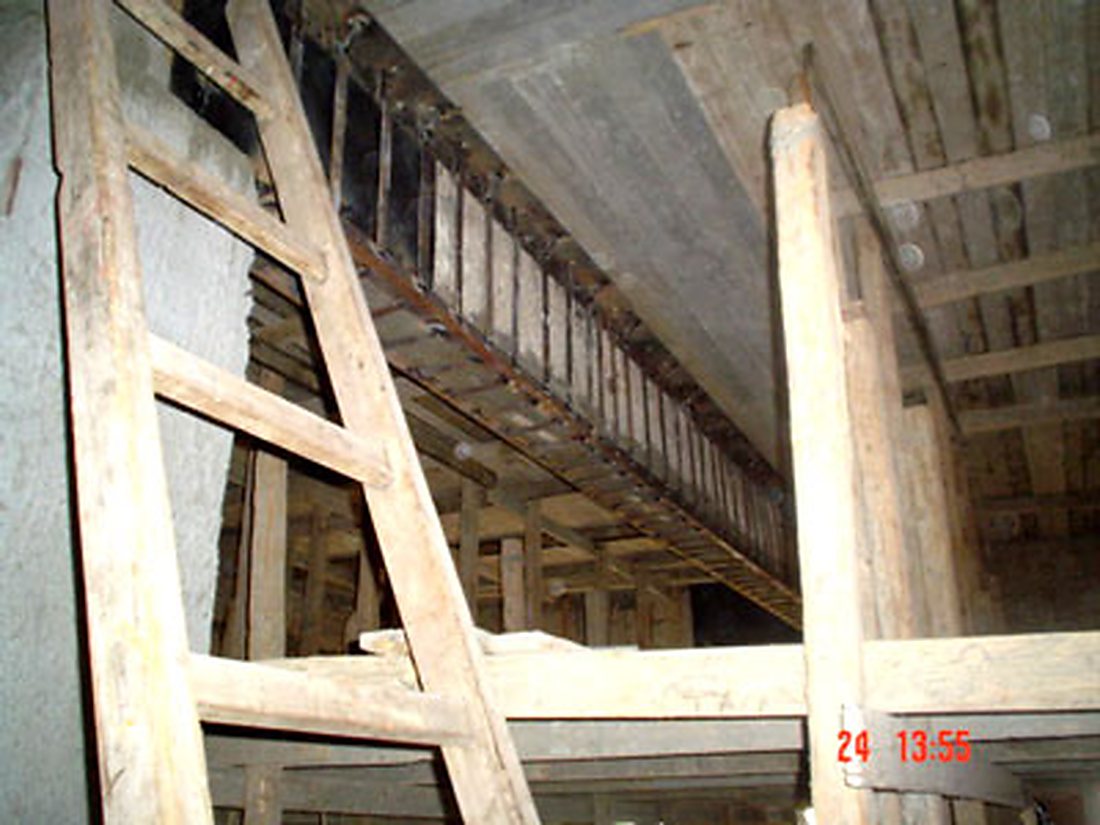
Where MST has been used
Buildings that were
already standing.
Strengthening is never a clean-sheet exercise. Most of this work was done in occupied or partly built structures, where the column being strengthened was already carrying the floors above it.
- Olympic Administrative Complex, Cairo Strengthening study
- Benzion building, Cairo Strengthening study
- Truck bridge, Port Said Repair & strengthening
- Structures for the Roads & Bridges Authority, Egypt Repair & strengthening
- Five residential towers, Kuwait Condition report & remedy
- Sports education complex, Port Said Strengthening study
- Dozens of buildings, factories and towers, Egypt Strengthening studies
- Bridges across Saudi Arabia Repair & strengthening
Is it strong enough?
Send the drawings, the current loads and the loads you want. We will tell you whether MST is the right answer — and what it would take.